
Why Does Car Upholstery Smell in Your Car?
- Chuck Todd
- Aug 22
- 5 min read

Why does car upholstery smell even after you have picked up the trash, vacuumed the floor mats, and sprayed an air freshener? Usually, the odor is not sitting on the surface. It has worked its way into fabric fibers, seat foam, carpet padding, or the vehicle’s ventilation system. A lasting fix starts with finding the source instead of trying to cover it up.
Why Does Car Upholstery Smell? The Cause Is Usually Below the Surface
Car upholstery is designed to be comfortable and durable, but cloth seats and carpet are also absorbent. They collect moisture, oils, food particles, pet hair, smoke residue, and everyday dirt. Once those materials settle into the fabric or padding, they can create odors that return whenever the cabin gets warm or humid.
Spills That Were Never Fully Removed
Coffee, milk, soda, fast food, protein shakes, and juice can soak much deeper than they appear to. Wiping the seat right away helps, but it does not always reach the foam underneath. As the leftover residue breaks down, bacteria can feed on it and create a sour or musty smell.
Milk, dairy-based drinks, and food spills deserve quick attention. A small spill can create a strong odor days later, especially during hot weather. The longer it sits, the more likely a basic surface cleaning will fall short.
Moisture, Mold, and Mildew
A wet towel, damp clothing, leaking water bottle, wet shoes, or an open window during rain can leave enough moisture in a vehicle to cause trouble. When seats, carpets, or floor padding do not dry completely, mildew can develop. The smell may be faint at first, then become stronger after the car has been parked in the sun.
A musty odor should not be ignored. It may be caused by a simple spill, but it can also point to a water leak around a door seal, windshield, sunroof, trunk, or AC drain. Cleaning the interior without correcting the leak means the smell will likely return.
Pets, Kids, and Daily Use
Families, pet owners, and rideshare drivers put more wear on an interior than most people realize. Pet hair holds onto oils and dander. Snacks get crushed into seat seams. Sports gear, strollers, diaper bags, and gym clothes can carry moisture and bacteria into the cabin.
This does not mean your vehicle is beyond saving. It simply means it may need more than a quick vacuum and a fresh-scented spray. Thorough cleaning needs to reach crevices, seat tracks, carpets, and the areas beneath the seats where odor-causing debris often collects.
Smoke, Vaping, and Strong Fragrances
Cigarette smoke leaves behind sticky residue that clings to cloth, leather, plastic, glass, and the headliner. Vaping can leave residue as well, particularly when used regularly in a closed vehicle. These odors are difficult because they spread throughout the interior rather than staying in one spot.
Strong air fresheners can also become part of the problem. If several products have been used to hide an odor, the cabin may develop a heavy mixed scent that is just as unpleasant. The goal should be a clean, neutral interior, not a stronger fragrance.
How to Tell What Is Making Your Car Smell
The timing and location of an odor can offer useful clues. A smell that becomes worse when the air conditioning starts may be connected to the cabin air filter, evaporator area, or moisture in the HVAC system. An odor that gets stronger after rain may point to trapped water or a leak.
If the smell is strongest near one seat or section of carpet, inspect that area closely. Look under floor mats, between cushions, around cup holders, and beneath the front seats. Dried spills may leave discoloration, stiffness, or a sticky feel. Rodent droppings, nesting material, or chewed insulation require extra care because they can create persistent odors and sanitation concerns.
A sweet smell can sometimes be a sign of coolant, while a gas smell, burning smell, or exhaust smell is not an upholstery issue to treat with detailing. Those odors may indicate a mechanical or safety concern and should be checked by a qualified automotive technician before the vehicle is driven further.
Removing Odors Takes More Than Air Freshener
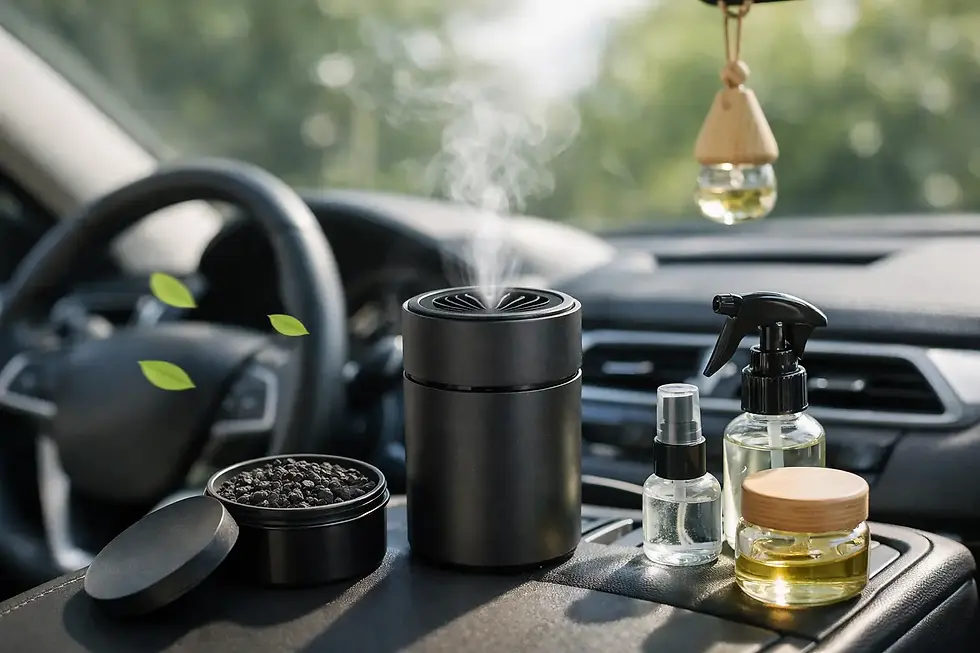
Air fresheners have a place when you want a light, clean finishing scent. They are not a substitute for removing contamination. If the source remains in the seat foam or carpet padding, the fragrance fades and the original odor comes back.
A proper interior odor treatment typically begins with a detailed inspection. The affected areas are vacuumed to remove loose debris, then cleaned with products appropriate for the upholstery material and the type of contamination. Fabric seats and carpets may need shampooing, steam treatment, or hot-water extraction to lift embedded residue from below the surface.
Extraction is especially useful for spills, pet accidents, and heavily soiled carpeting because it flushes contaminants out instead of moving them around. The work must be followed by proper drying. Leaving seats or carpet overly wet can create a new mildew issue, which defeats the purpose of the cleaning.
For organic odors, such as food, pet accidents, or rodent contamination, an enzyme-based treatment may be needed. Enzymes are designed to break down the organic material causing the odor. The right product and process depend on the surface, the age of the stain, and how deeply the contamination has reached.
Smoke odors can require a more comprehensive approach. Cleaning the seats alone is rarely enough. Interior plastics, glass, carpets, headliner, and ventilation components may all need attention. In severe cases, the cabin air filter should be replaced after the interior has been cleaned so it does not reintroduce old odors into the vehicle.
When Professional Interior Detailing Is the Better Choice
A do-it-yourself cleanup can work well for a fresh, small spill when you act quickly. Blot the area instead of scrubbing it, use a cleaner made for your upholstery type, and allow the area to dry fully. Avoid soaking the seat with too much product or water.
Professional help is often the smarter option when the odor keeps returning, the spill has reached the padding, there is visible mildew, or the source is unknown. It is also a good call after a pet accident, a rodent issue, smoke exposure, or a large drink spill. These situations require equipment and cleaning methods that go beyond a home vacuum and a bottle of upholstery cleaner.
On the Spot Mobile Detail brings interior deep-cleaning service directly to your location, so you do not have to rearrange your day around a detailing appointment. A professional assessment can identify whether the issue is surface-level or whether the seats, carpets, and hard-to-reach areas need deeper treatment.
Keep Upholstery Odors From Coming Back
The easiest way to prevent lingering smells is to handle spills right away and keep moisture out of the cabin. Remove wet items, empty food containers, and avoid leaving damp floor mats in the vehicle. Regular vacuuming also prevents crumbs, pet hair, and dirt from working deeper into upholstery.
If you transport pets, children, or frequent passengers, periodic interior detailing is practical maintenance, not an unnecessary extra. It protects the condition of your cabin, makes every drive more comfortable, and helps preserve resale value when it is time to sell or trade in.
If your car still smells after basic cleaning, do not keep adding fragrance and hoping it fades. The odor is telling you something is still there. Address the source early, and your interior can feel clean, comfortable, and ready for the road again.


Comments