
Vehicle Odor Elimination Guide for a Fresh Car
- Chuck Todd
- Aug 20
- 5 min read

That smell that hits you when you open the door is rarely just “car smell.” It is usually moisture, food residue, pet hair, smoke particles, bacteria, or contamination trapped in places a quick vacuum cannot reach. A proper vehicle odor elimination guide starts by finding the source, because covering an odor with air freshener only creates a stronger, more frustrating mix.
For busy families, rideshare drivers, commuters, and anyone who spends real time in their vehicle, odor removal is about more than appearances. A clean-smelling interior is more comfortable, easier to maintain, and more welcoming for passengers. The right solution depends on what caused the odor and how long it has been allowed to settle into the cabin.
Find the Source Before You Treat the Smell
Odors travel through fabric, carpet, vents, and the vehicle’s heating and air-conditioning system. That is why an interior can look clean while still smelling stale. Before applying a deodorizer, inspect the areas where odor-causing material tends to hide.
Check beneath the front and rear seats, inside seat pockets, cup holders, door panels, floor mats, trunk compartments, and spare-tire wells. Look for damp carpet, old drinks, forgotten food, pet accidents, wet towels, sports gear, or signs of rodents. Even a small spill can soak through carpet fibers and reach the padding underneath, where it continues to smell long after the visible stain disappears.
Turn on the air conditioning and heat separately. If the odor becomes stronger only when air is blowing, the cabin air filter, evaporator area, or vents may be part of the problem. If it is strongest after rain or a car wash, moisture intrusion could be the real issue. Cleaning the interior without correcting a leak will only provide temporary relief.
Vehicle Odor Elimination Guide: Match the Method to the Cause
Different odors need different treatment. The goal is to remove the material producing the odor, then neutralize what remains. Sprays and hanging fresheners can improve the first impression, but they are not a substitute for extraction cleaning or sanitizing when contamination is embedded in the interior.
Food and drink spills
For a fresh spill, blot it immediately with a clean towel. Avoid rubbing, which can push liquid deeper into upholstery or carpet. Once the area is dry, inspect it again. Sugary drinks, milk, coffee, and protein-based foods often leave residue that feeds odor-causing bacteria.
A targeted interior cleaner and extraction treatment are usually the best options for set-in spills. Extraction uses cleaning solution and suction to pull contamination from carpet and fabric instead of simply wetting the surface. If the spill reached the carpet padding, it may require more than one treatment and enough drying time before the vehicle is closed up.
Pet odors and accidents
Pet hair can trap dander and moisture in seats, carpets, and cargo areas. Urine is more difficult because it can soak below the surface and leave crystals behind as it dries. Standard shampoo may improve the smell for a short time but may not fully remove the source.
Enzyme-based treatment can help break down organic residue, followed by deep cleaning and extraction. For persistent pet odors, the affected carpet, mat, or seat area needs close inspection. The most effective treatment is the one that reaches the exact spot, not the one with the strongest fragrance.
Smoke and vaping odors
Smoke particles settle into headliners, fabric seats, carpets, glass, and the HVAC system. Vaping can also leave a sweet or stale film on interior surfaces. This is one of the most labor-intensive odor issues because the source is not limited to one stain or one seat.
A full interior cleaning should include vacuuming, fabric or leather-safe cleaning, detail work around trim, and cleaning interior glass. The cabin air filter may need replacement. Odor neutralization treatment can be useful after the surfaces are cleaned, but it should never be used as a shortcut around removing the residue itself.
Mildew, dampness, and water leaks
A musty odor is a warning sign. It often means the interior has been wet long enough for mildew or mold growth to begin. Check floor mats, carpet edges, trunk liners, door seals, sunroof drains, and the area beneath the seats. Do not ignore damp padding just because the top layer feels dry.
The vehicle must be dried completely and the source of water corrected. Otherwise, the smell will return. When mold is visible, widespread, or connected to a significant water event, professional assessment is the safer choice. Your health and the condition of the vehicle come before a quick cosmetic fix.
Rodent odors and contamination
Rodents can leave urine, nesting material, droppings, and chewed debris in the engine bay, cabin filter area, trunk, or under the seats. Beyond the odor, this can create sanitation concerns and potential damage to wiring.
Do not vacuum dry droppings or disturb nesting material without proper protection. Professional cleanup and extraction can help remove contaminated materials from accessible interior areas, while a mechanic may be needed if wiring or components have been damaged. Rodent prevention steps are worth discussing after cleanup so the problem does not repeat.
Clean the Interior in the Right Order
Odor removal works best when the interior is cleaned from top to bottom. Start by removing trash and personal items, then vacuum seats, carpets, seams, mats, and the trunk. Move on to upholstery, leather, vinyl, plastic, and interior glass using products suited to each surface.
Fabric seats and carpet need controlled moisture. Too much water can create a new mildew issue, especially in humid conditions or when the vehicle cannot stay open long enough to dry. Leather needs a leather-safe cleaner and conditioner, not harsh household products that can dry or discolor it.
Floor mats deserve separate attention. Rubber mats can be washed and dried thoroughly. Carpet mats should be vacuumed, treated for stains as needed, and fully dried before they go back into the vehicle. Reinstalling damp mats is an easy way to bring an odor right back.
After cleaning, allow airflow through the vehicle. Open doors or windows in a secure, dry location, and run the fan system as appropriate. A clean vehicle that stays damp will not stay fresh.
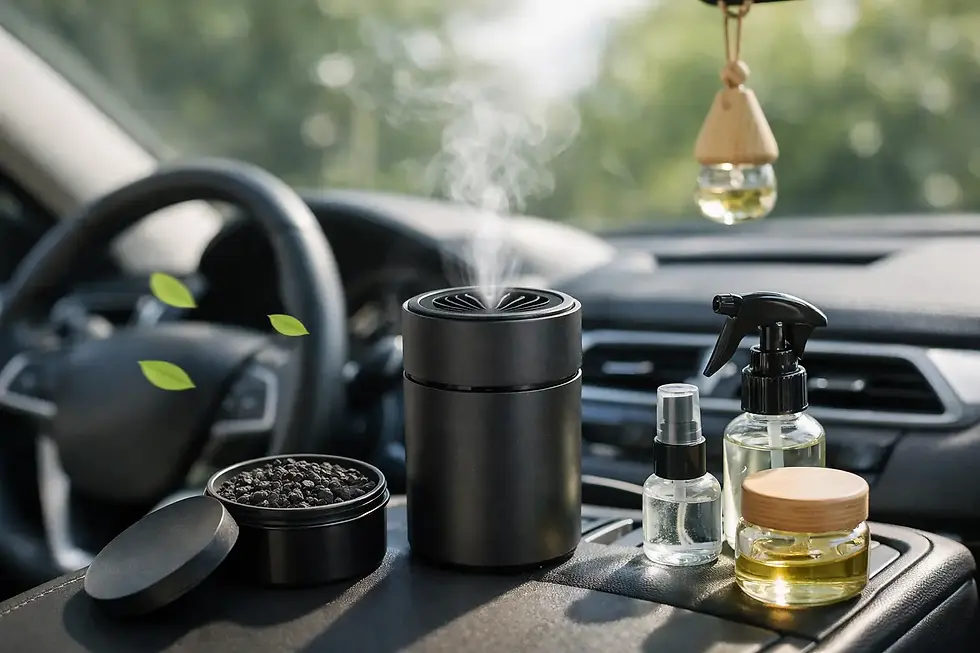
Do Air Fresheners, Ozone, and Deodorizers Work?
They can help, but each has limits. Air fresheners provide fragrance, not deep odor removal. They are best used after the source has been cleaned, and a light scent is usually more pleasant than one that overwhelms the cabin.
Odor neutralizers can reduce lingering smells after an interior deep clean. Ozone treatments are sometimes used for severe odors, but they require proper equipment, controlled use, and an empty vehicle during treatment. They are not a casual DIY solution and should not be used to avoid cleaning contaminated surfaces first.
If the smell returns within a few days, treat that as useful information. It usually means the source is still present, the area was not fully dried, or the HVAC system needs attention.
When Professional Mobile Detailing Makes Sense
A basic cleanup may be enough for a recent snack spill or light everyday odors. Professional help is the better investment when odor is embedded in carpet padding, upholstery, vents, the trunk, or multiple areas of the cabin. It is also a practical choice when your schedule does not leave room for hours of vacuuming, stain treatment, drying, and repeat cleaning.
On the Spot Mobile Detail brings interior deep-cleaning service to your location, helping you address odor issues without rearranging your day around a detailing shop visit. A professional service can inspect the interior, target the likely source, and recommend the right level of cleaning rather than selling a one-size-fits-all fix.
For severe smoke, mildew, rodent contamination, or recurring water-related odors, be upfront about what happened before the appointment. Clear information helps the detailer prepare the right tools and set realistic expectations. Some odors can be greatly reduced in one visit, while deeply saturated contamination may require additional treatment or repair work.
A fresh vehicle should not depend on a stronger air freshener. Remove the source, clean the surfaces it reached, dry the interior completely, and address any leak or mechanical issue behind it. That approach keeps your vehicle more comfortable every time you get behind the wheel.


Comments